
White-label VPN partners often ask how Source Code Vs Hosted fits next to a branded Klox client. Short answer: branding, billing, and support are yours; the tunnel is still WireGuard, OpenVPN, OpenConnect, and Shadowsocks on five devices.
We keep commercial facts upfront: consumer pricing reference is $2.83/month on the yearly plan with 7-day money-back on your first purchase; partner economics live on /white-label and /reseller.
This page is for founders, agencies, and IT shops packaging Klox under their own name. It is not a consumer setup guide — end users still download your app build and press Connect.
Source Code Vs Hosted may appear in your stack — website, comments, installers, or admin tools. None of that replaces the VPN protocol or adds a secret "Source Code Vs Hosted mode" inside the tunnel.
Looking for a reliable VPN?
KloxVPN — from $2.83/month. Apps for every device.
What Source Code Vs Hosted is in your stack
Store reviewers compare screenshots to real behavior. Mislabelled `Source Code Vs Hosted` strings are an easy rejection reason.
Reseller and white-label paths differ; pick one story on your homepage.
When unsure, link to /white-label instead of improvising specs in sales email.
Document which version removed or renamed `Source Code Vs Hosted` so SEO pages like this one stay truthful.
Partners grep builds, store listings, and support macros for strings like `Source Code Vs Hosted`. That is a packaging question: does the name still ship, should it be renamed, or removed?
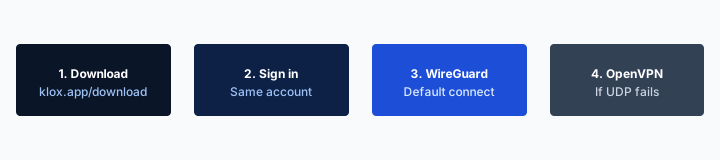
- 1Skim the diagram above.
- 2Do the numbered steps once on your real network.
- 3Use the FAQ if a sentence was too long.
- 4Follow one related article — not ten tabs.
How to read this page
| Layer | Hosted white-label | Source-code license | Failure if you assume the other column |
|---|---|---|---|
| WireGuard / OpenVPN clients | Vendor ships updates | You compile, sign, and submit | Store binary goes stale while OS ships |
| Exit nodes | Vendor operates | You host, peer, and rotate IPs | Abuse mail hits a dead alias |
| Control plane | Vendor account APIs as contracted | You run it, or you don't | You cannot revoke a stolen laptop |
| Store certificates | Usually your developer accounts | Always yours, plus your CI | Expired provisioning profile, dead iOS |
| Exit if vendor dies | Contract, data export, brand still yours | You already have code; ops still yours | Orphans with a logo and no nodes |
If nobody on your payroll can ship an iOS Network Extension build, you did not buy independence. You bought a PDF.
— KloxVPN operator notes
Cloudflare Learning: What is a VPN?
Store vs tunnel
App Store screenshots and Play listing text are marketing surfaces. The tunnel handshake is engineering. Keep tickets separated.
Store reviewers compare screenshots to real behavior. Mislabelled `Source Code Vs Hosted` strings are an easy rejection reason.
When users mention Source Code Vs Hosted
If a subscriber cites `Source Code Vs Hosted` in a ticket, clarify whether they mean your website, your installer, or a VPN error message.
Partners win when support scripts are boring and accurate. Excitement in copy usually means someone promised a protocol feature that does not exist.
What the tunnel still does
Do not promise features Klox does not ship — extra protocols, unlimited devices beyond plan limits, or compliance badges you cannot show.
Document which version removed or renamed `Source Code Vs Hosted` so SEO pages like this one stay truthful.
Run quarterly content audits on blog posts that mention `Source Code Vs Hosted` so partners do not contradict each other.
You inherit server capacity, protocol maintenance, and core app updates from Klox infrastructure. You own front-line support and brand promise.
Regardless of brand paint, the client wraps traffic the same way: encrypted tunnel to your chosen server, DNS through the tunnel when configured, kill switch optional per platform.
Device cap
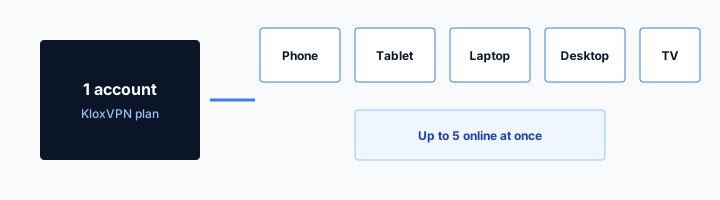
five devices per subscription is still enforced. Your pricing page should say so clearly.
Your brand promise should match Klox capabilities: WireGuard, OpenVPN, OpenConnect, and Shadowsocks, five devices, honest refund language.
Protocol choice
WireGuard first, OpenVPN fallback — same as consumer. Document that in partner FAQs.
Reseller and white-label paths differ; pick one story on your homepage.
Branding checklist around Source Code Vs Hosted
If you rebrand, update every surface in one release when possible. Half-old names confuse users and app review.
Keep /download logic in mind: consumer links on your domain should point to your build, not klox.app, unless that is intentional.
Run quarterly content audits on blog posts that mention `Source Code Vs Hosted` so partners do not contradict each other.
Your brand promise should match Klox capabilities: WireGuard, OpenVPN, OpenConnect, and Shadowsocks, five devices, honest refund language.
Reseller and white-label paths differ; pick one story on your homepage.
Comments and CMS plugins
Some partners embed comment systems or CMS tools named `Source Code Vs Hosted`. That is website plumbing, not VPN configuration.
Keep marketing, engineering, and support in one thread when `Source Code Vs Hosted` changes. Silent renames cause refund spikes.
2FA and admin panels
Protect reseller panels separately. See admin 2FA checklist if you have not locked down logins.
Run quarterly content audits on blog posts that mention `Source Code Vs Hosted` so partners do not contradict each other.
Support scripts that work
Ask: OS, app version, protocol, and whether Connect ever worked on another network. Only then dig into build strings like `Source Code Vs Hosted`.
Store reviewers compare screenshots to real behavior. Mislabelled `Source Code Vs Hosted` strings are an easy rejection reason.
Never tell a user to edit Linux sysctls because a partner string appeared in a log — that is a different team.
Run quarterly content audits on blog posts that mention `Source Code Vs Hosted` so partners do not contradict each other.
Your brand promise should match Klox capabilities: WireGuard, OpenVPN, OpenConnect, and Shadowsocks, five devices, honest refund language.
Refund policy
Mirror 7-day money-back on your first purchase in your terms or explain differences in writing before checkout.
Partners win when support scripts are boring and accurate. Excitement in copy usually means someone promised a protocol feature that does not exist.
Launch week
Use launch checklist so `Source Code Vs Hosted` questions do not land on day one.
Store reviewers compare screenshots to real behavior. Mislabelled `Source Code Vs Hosted` strings are an easy rejection reason.
What not to promise
Keep marketing, engineering, and support in one thread when `Source Code Vs Hosted` changes. Silent renames cause refund spikes.
When unsure, link to /white-label instead of improvising specs in sales email.
White-label is speed to market with a proven tunnel — not a license to invent physics.
Reseller and white-label paths differ; pick one story on your homepage.
Point enterprise buyers to /trust-center for what Klox publishes today, then add your own policies honestly.
Competitor comparisons
Compare features you ship. Avoid review-farm copy; it ages badly and triggers store rejection.
When unsure, link to /white-label instead of improvising specs in sales email.
Next step
Talk to sales via /white-label when you are ready to ship glass with your logo.
Document which version removed or renamed `Source Code Vs Hosted` so SEO pages like this one stay truthful.
Release checklist when Source Code Vs Hosted appears in builds
Confirm billing pages still mention five devices and refund policy accurately.
When unsure, link to /white-label instead of improvising specs in sales email.
Document which version removed or renamed `Source Code Vs Hosted` so SEO pages like this one stay truthful.
Store reviewers compare screenshots to real behavior. Mislabelled `Source Code Vs Hosted` strings are an easy rejection reason.
Search your repo and CI artifacts for `Source Code Vs Hosted` before every store submission.
App review
Apple and Google reject inconsistent VPN claims. Keep copy aligned with actual protocols.
Store reviewers compare screenshots to real behavior. Mislabelled `Source Code Vs Hosted` strings are an easy rejection reason.
Versioning
Tag builds that change `Source Code Vs Hosted` so support can map tickets to releases.
Partners win when support scripts are boring and accurate. Excitement in copy usually means someone promised a protocol feature that does not exist.
Partner FAQ snippets
Q: Do we operate servers? A: You brand and support; infrastructure follows your Klox agreement.
Q: Where is pricing? A: You set retail; reference $2.83/month on the yearly plan only if you mirror consumer tiers.
When unsure, link to /white-label instead of improvising specs in sales email.
Run quarterly content audits on blog posts that mention `Source Code Vs Hosted` so partners do not contradict each other.
Q: Does `Source Code Vs Hosted` change encryption? A: No. WireGuard, OpenVPN, OpenConnect, and Shadowsocks still powers the tunnel.
Sales
Point enterprise buyers to /trust-center for published policies.
Your brand promise should match Klox capabilities: WireGuard, OpenVPN, OpenConnect, and Shadowsocks, five devices, honest refund language.
Reseller
Reseller program if you want volume without full white-label.
Reseller and white-label paths differ; pick one story on your homepage.
Long-term maintenance
Train new support staff on tunnel vs branding tickets in the first week.
Keep a single internal doc listing approved product claims.
Collect user feedback on confusing labels — rename in the next release rather than debating in chat.
Keep marketing, engineering, and support in one thread when `Source Code Vs Hosted` changes. Silent renames cause refund spikes.
Run quarterly content audits on blog posts that mention `Source Code Vs Hosted` so partners do not contradict each other.
Branding
Keep marketing, engineering, and support in one thread when `Source Code Vs Hosted` changes. Silent renames cause refund spikes.
Contact
White-label for partnership questions.
Run quarterly content audits on blog posts that mention `Source Code Vs Hosted` so partners do not contradict each other.
Key Takeaways
Document naming decisions, split support tickets, and do not promise features the core app does not have.
Key takeaway: Source Code Vs Hosted is part of your brand or stack — not a new tunnel protocol. Klox white-label still ships WireGuard, OpenVPN, OpenConnect, and Shadowsocks on five devices.
Related Resources
Launch your branded VPN
KloxVPN — WireGuard, OpenVPN, OpenConnect, and Shadowsocks, five devices, $2.83/month on the yearly plan. 7-day money-back on your first purchase.
Explore white-labelFrequently Asked Questions
KloxVPN Team
Experts in VPN infrastructure, network security, and online privacy. The KloxVPN team has been building and operating VPN services since 2019, providing consumer and white-label VPN solutions to thousands of users worldwide.