You flashed BIOS or UEFI on a PC you still own. Same case. Same motherboard. Same disk in the bay. Windows or Linux still boots yesterday's wallpaper. Lenovo Vantage offered a firmware capsule. Dell's utility sat in the tray for a week. Windows Update listed an optional device firmware package and you clicked it because the laptop felt old. A USB stick from the OEM site. fwupd on Linux. The chassis did not leave the desk. The OS did not get wiped. Ranked listicles will mash that into a Windows reinstall, a Linux wipe, a new SSD, a Windows feature update, and S mode until the affiliate cookie expires. This page is narrower. Same human. Same chassis. Same platter. New firmware. Matching installer from /download if the adapter died. Sign in. Seat. The leftover is firmware, not an empty disk.
This is not VPN After a Windows Reinstall: Same PC, Empty OS, Matching .exe. That URL is empty Windows on the disk that was already in the bay. Apps gone. Adapter gone. Matching .exe because that disk forgot the binary. Here the disk still has Program Files. The tray icon may still sit. The unique leftover is motherboard code. A wipe essay does not own Secure Boot keys that just got rewritten.
This is not VPN After Replacing an SSD: Same PC, New Disk, Matching Installer. That URL is a new stick in the bay, or a clone, plus an old SSD that can still handshake from a USB caddy. Here the platter stayed. You did not seat a blank NVMe. You did not copy sectors. Do not paste the caddy checklist onto a machine that still boots the same disk it had on Monday.
This is not VPN After a Linux Reinstall: Same PC, Empty Disk, Matching Package. That URL is empty Linux on the disk you already had. Packages gone. tun gone. Matching .deb or .rpm because the same SSD forgot Klox. Here root is still yesterday. fwupd may have touched the SPI chip. Distro media is not the plot. Do not paste the wipe checklist onto a firmware capsule that left apt alone.
This is not VPN on Windows S Mode: Store-Only, No Sideload .exe. S mode is Store-only. Our Windows client is an .exe that needs administrator privileges. A BIOS flash does not put you into S mode and does not take you out. If you were Store-locked before the flash, you still are. Stop here and read that gate. This article assumes you can run a website installer.
A Windows feature update is also next door, even without its own URL in this sentence. Feature updates replace OS bits. They are Microsoft's product. Firmware is the board. Mixing those in one sentence is how farms sell best VPN after BIOS until the cookie expires. If Windows itself broke networking after 24H2, that is an OS leftover. If the NIC died after you flashed AMI or Insyde from the OEM, that is this page.
HTTPS already encrypts the page on most of the sites you actually use. The lock in the browser is real. A VPN still wraps the path from this PC to a server you picked, once the app is actually running and the virtual adapter Windows still trusts. Wikipedia's VPN page is the noun. RFC 8446 is TLS 1.3 on the website. It is not a BIOS flash. It is not Secure Boot. Encrypted Client Hello will not repair a driver the firmware just refused. Do not pretend the padlock survived the capsule for you.
KloxVPN is WireGuard, OpenVPN, OpenConnect, and Shadowsocks, five devices, yearly from $2.83 a month, 7-day money-back on first purchase. This PC still counts as one seat after you sign in again. Download splits Windows as AMD64 for Intel and AMD CPUs, and ARM64 for ARM processors. Linux ships Klox-linux-amd64.deb, Klox-linux-amd64.rpm, Klox-linux-arm.deb, and Klox-linux-arm.rpm if the client or the tun actually died. Pricing is the live number. The seven-day window is first purchase, not a firmware coupon because you flashed the board. Cookies on this site live at /cookie. I will not invent a city count as a reason the flash is special. I will not invent a portal URL. I will not invent SOC 2.
I have a bias. Look at the tray first. If Klox still launches, sign in if the token died, allow the adapter if Windows asks again, and skip a second installer so two privileged copies fight. If Connect fails after the flash, type klox.app/download. Pick the architecture that matches this chassis. The CPU did not change because you updated firmware. Sign into the same email. Do not flash a PC you do not own. Count the household on the Family VPN on Five Devices if a phone is also holding a session.
Related reading: Windows VPN Setup Checklist (2026) and VPN on Windows ARM: Pick the ARM64 Installer, Not AMD64. What is a VPN? and Android VPN setup. iOS VPN setup.
Looking for a reliable VPN?
KloxVPN — from $2.83/month. Apps for every device.
A BIOS flash on a PC you still own is not an OS reinstall
A Windows reinstall on a PC you kept is an .exe, an architecture picker, and a virtual adapter the installer added because the disk forgot everything. That essay already owns empty Windows on the platter that stayed. A Linux reinstall on a PC you kept is a .deb or an .rpm and a tun the client added. That essay already owns empty Linux on the platter that stayed. Replacing the SSD is a different leftover. The bay changed. The old stick may still sit in a drawer. A BIOS or UEFI flash is none of those. The disk stayed. The OS stayed. Apps can still sit in Program Files. The leftover is firmware on the board you already owned. First-run Windows after a wipe does not remember that you paid for a year. A firmware capsule that left the desktop looking fine can still break the adapter Windows used to trust. Farms skip that sentence because the keyword is privacy. Privacy after a flash you meant to run is a matching installer plus a seat plus Secure Boot leftover, not a screenshot of Fastest server.
Replacing the home router leaves the Windows client sitting in Program Files. You forget an SSID. You rejoin. That is a radio swap in the kitchen. This URL is a firmware swap on the same chassis. Selling a phone is outbound. The glass leaves. You are not handing this laptop to a buyer in this article. If you are, stop. Disconnect first. Mixing those in one sentence is how farms sell one checklist for four different days.
S mode is a Store cage. A flash does not open it. A flash does not close it. If the .exe was blocked before you opened the OEM utility, it is still blocked. Do not treat a successful capsule as proof you can now sideload. Read the S-mode article if Windows refused the file with a Store-only story. This page assumes the installer is allowed to run.
I will not walk packet sniffing. The public Wi-Fi how-to already did. I will not pack your chargers. The travel checklist exists for install-before-you-fly. Here the PC is already on the desk. The firmware is new, or it is a capsule Windows already applied. The download page is the next job if the adapter died. The seat is the job after that. Secure Boot is a job the reinstall essays do not have in this shape.
Klox is a consumer tunnel to an exit you picked. It is not Lenovo Vantage. It is not Dell Command Update. It is not HP Support Assistant. It is not the USB recovery stick the OEM mailed with a warning in all caps. Wikipedia's UEFI page is the vendor-neutral novel for what that firmware actually is. I will stay at overview height. I will not paste a 40-click flash path that rots when a vendor moves a screenshot from BIOS to UEFI Setup. Farms skip that sentence because the keyword is BIOS update. A firmware update is an OEM product. Reinstalling Klox, or not, is ours.
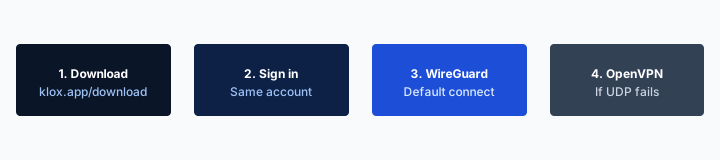
- 1Download the app from klox.app/download — not a random APK site.
- 2Sign in with the account you paid for.
- 3Press WireGuard. Wait for the connected state.
- 4If it fails, try OpenVPN. Still failing: note the network (hotel, campus, home) before you write support.
First successful connect
| Situation | What you think happened | What actually happened | This page? |
|---|---|---|---|
| Windows reinstall on the SAME disk | Firmware old | Apps gone on the platter that stayed | Windows-reinstall article |
| Linux reinstall on the SAME disk | Firmware old | Packages gone on the platter that stayed | Linux-reinstall article |
| You cloned or replaced the SSD | Firmware old | Bay changed; old disk can still boot | SSD-swap article |
| Windows S mode | A flash unlocked the .exe | Store-only; flash did not change the cage | S-mode article |
| Windows feature update | Motherboard firmware | OS bits; networking stack is Microsoft | Not this page |
| You flashed BIOS or UEFI on YOUR PC | Flash reinstalled Klox | OS stayed; adapter and Secure Boot can break | Yes |
| Tray still launches, Connect fails | Need a new account | Driver or Secure Boot old; maybe reinstall | Yes |
| PC you do not own | A blog ranked privacy | Stop | No. Do not flash it. |
You flashed BIOS or UEFI on a PC you still own. Get the matching installer from /download if the adapter died. Do not flash a machine you do not own. Seven days is not a firmware coupon.
— KloxVPN consumer notes
Cloudflare Learning: What is a VPN?
Wikipedia: Virtual private network
Same chassis, same disk, firmware leftover
Selling is outbound. An OS reinstall empties the platter. An SSD swap changes the bay. S mode is Store-only. This URL is motherboard code on hardware you kept. Do not paste one checklist into all five days.
A firmware capsule is not a Klox logout button
The account may still show this laptop. The tray may still sit. Prefer looking. Flashing UEFI is not a VPN feature. Pulling the power cord after a capsule is not a logout either.
Secure Boot and the virtual adapter can break while the tray still sits
People say the BIOS update killed my VPN and mean two different jobs. One: the client is gone. Unlikely after a flash that left Windows intact, but a vendor utility can uninstall what it does not recognize, or a failed capsule can leave Setup in a state where drivers never load. Two: the client launches, the icon sits, Connect fails. That is the common leftover. Program Files still has yesterday. The virtual NIC Windows used to attach is unhappy. Hardware IDs shifted in the firmware's view of the board. Secure Boot keys reset to factory defaults. A driver that loaded last month now fails the signature check. First Connect after a flash will ask again. Allow it. Cancel is how people decide the motherboard hated VPNs. The product did not hate them. They denied the NIC, or Secure Boot denied it for them.
I will not invent a TAP versus Wintun picker. The Download page does not offer that as a consumer protocol. Protocols remain WireGuard, OpenVPN, OpenConnect, and Shadowsocks. WireGuard first. OpenVPN when UDP is rude. Do not add a VPN in Windows Settings and pick IKEv2. That built-in row is not Klox. Two tunnels is how you get none. The Windows VPN Setup Checklist (2026) owns that order once the binary actually runs. This page exists so you remember the adapter can die in a flash that still shows a tray icon.
Linux after fwupd can leave a stale tun, a leftover WireGuard config in the old home, or a NetworkManager connection that points at nothing. If the package is still installed, look before you install a second copy. If the client will not create the interface, install the matching .deb or .rpm from /download and let it try again. Do not paste a .conf you exported last year into NetworkManager and then file a ticket that the GUI leak toggle is missing. A raw config is a tunnel. It is not automatically those extras.
Secure Boot is the OEM and Microsoft, or the distro's shim. A tunnel does not sign drivers. A tunnel does not enroll keys in the firmware. If Setup shows Secure Boot Off after a flash, that is a leftover the vendor created, not a Klox setting. If Setup shows Secure Boot On and the adapter now fails, reinstall from /download as administrator so the installer can add the NIC again. Turning Secure Boot off to make a VPN work is how a firmware day becomes a hobbyist lab. I will not coach that as a fix. I will not coach skipping a firmware password. Those are the board and the OEM. Farms skip that sentence because the keyword is Secure Boot VPN. Secure Boot is a boot policy. It is not a cloak.
Another VPN leftover can own the NIC if you installed a trial from a banner while you waited for the capsule to finish. Uninstall that. Then ours. Two privileged adapters fighting is a support ticket that starts with I updated BIOS and nothing works. Split the jobs. Firmware is the OEM. Binary is /download if the adapter died. Adapter is Allow. Protocol is WireGuard unless the cafe is rude. Windows Firewall stays on. The VPN and Windows Firewall: Do They Work Together? is the shield-plus-tunnel coexistence. Turning the shield off to make VPN work after a flash is the same lab, different excuse.
Cancel on the adapter prompt is how Connect fails after a flash
No adapter, no tunnel. Run the installer as administrator if Windows never asked. Then Connect. Approve the sheet. First handshake on a network you already trust. A pretty desktop after UEFI is not proof the NIC survived.
IKEv2 in Settings is not a Klox protocol
Klox ships WireGuard, OpenVPN, OpenConnect, and Shadowsocks. A built-in Windows VPN row is a different product. Do not stack it under our tray icon and then ask why both look disconnected. A Linux NetworkManager import of a random .conf is the same mistake with a different logo.
Pick AMD64 or ARM64 from /download if the adapter died
A firmware flash does not return you to first-run chrome. Browser bookmarks are still there. The old Klox shortcut is probably still there. Open a browser you trust. Type klox.app/download if Connect failed, if the adapter is missing in Device Manager, or if the client will not launch after Secure Boot came back on. Do not search Klox VPN installer and click the first ad. Ads impersonate download pages. Bookmark download after the first honest visit. A firmware day that still has a browser profile can still land you on a bookmark. Type the URL anyway if you are not sure the bookmark still points at us.
Windows 10 and Windows 11 both exist. Pick the architecture. AMD64 for Intel and AMD CPUs. ARM64 for ARM processors: Snapdragon, some Surface models, Copilot+ boxes. Settings, System, About, System type. ARM-based processor means ARM. x64-based processor means AMD64. Wrong arch fails to install or fails to launch. That story in full is VPN on Windows ARM: Pick the ARM64 Installer, Not AMD64. Here the firmware line is: the flash forgot which driver Windows trusted, and a capsule on an Intel laptop does not turn the chassis into ARM. Look again. Do not grab last year's USB stick with a renamed .exe because the filename felt lucky. Renaming the file does not change the binary. The CPU did not migrate because you updated AMI.
Linux after a broken tun is four files if you actually need the package again. Klox-linux-amd64.deb and Klox-linux-amd64.rpm for 64-bit Intel and AMD. Klox-linux-arm.deb and Klox-linux-arm.rpm for ARM. Debian, Ubuntu, and cousins take .deb. Fedora, RHEL-class, and cousins take .rpm. uname -m is the boring check. x86_64 means amd64 packages. aarch64 or arm64 means ARM packages. The VPN After a Linux Reinstall: Same PC, Empty Disk, Matching Package article owns empty root as a wipe on the same platter. This page exists so you remember why you might run that download without a wipe: fwupd touched firmware, the interface died, the OS stayed. Do not grab Klox-linux-arm.deb because you just read ARM in a forum about phones. You are on a PC until you are not.
Right-click the Windows .exe. Run as administrator. Follow the wizard. Launch. Sign into the same email you already paid on. A second account is how you lose the year you already bought and then hit a seat error on the old login you forgot. System requirements on that page: 2 GB RAM, 100 MB disk, internet, administrator privileges. Trust it. I will not invent a Store tile because a firmware prompt would have preferred one. SmartScreen may appear on a publisher you have not seen after a flash that also reset SmartScreen's cache, or after you downloaded again. That is not automatically malware. It is also not automatically fine. The test is the URL you typed. klox.app/download. More info. Run anyway only if you typed that URL.
If the tray still launches and Connect works after Allow, stop. You do not need a second installer. Two copies is how Device Manager shows two virtual NICs and neither handshake. Uninstall the extra. Keep one. Firmware leftover is a reason to repair. It is not a reason to collect EXEs.
Windows About still decides the .exe
ARM-based processor: Windows ARM file. x64-based processor: AMD64 file. Do this after the flash, not from memory of last year's USB. A UEFI capsule does not change the CPU. Compatibility mode does not fix the arch.
Linux wants the matching .deb or .rpm only if the package actually died
uname -m if you reinstall. Debian-class takes .deb. Fedora and RHEL-class take .rpm. Renaming Klox-linux-amd64.deb to Klox-linux-arm.deb does not change the binary. There is not a Flatpak or Snap on that page. Look before you download twice.
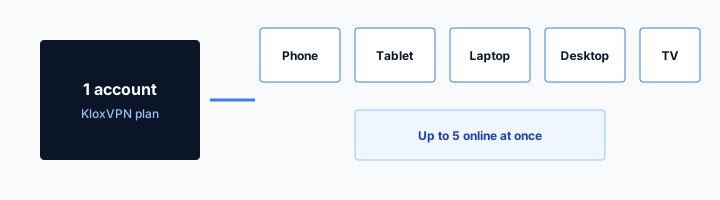
This PC is still one of five seats after you sign in
Timeout is the boring failure on a same-disk wipe. You reinstalled Windows. You did not disconnect first. The account still shows this laptop for a while. After a BIOS flash the failure is quieter. You still have one piece of flash that boots the same hostname. The same NVMe in the bay. You did not create a second disk. You may still see a leftover row if the client dropped during the reboot the OEM required, or if auto-connect raced Setup before drivers loaded. You connect, and you think you were robbed of a slot. You were not robbed. You left a corpse from a handshake that never quite died. Remove it in the live app. I will not invent a web portal URL for that tap. Confirm the client you already signed into. If the row is gone on its own, good. If it sits, disconnect that device from a logged-in client. A label is not a logout. Kick is a logout of that seat. It is still not a firmware wipe. Yanking the power brick is not a logout either if the handshake already happened.
I will not print a minutes-and-seconds figure for when a dead peer drops. Networks fail closed, fail open, retry. Prefer in-app disconnect before a flash you plan, so you are not guessing. If you already flashed, open Klox on this PC once it boots, or on a phone that still has the app, and remove the leftover row. Change the password if you are not sure who held the laptop during a shop flash. Password reset is not this article's novel. It is the obvious next move when a machine sat on a bench.
Family math lives in the five-device article. I will not rebuild the household spreadsheet. PC you flashed plus phone is the common kit for this URL. After a clean remove, you are back to the ones that are actually tunneled. Ghost sessions are how people think a firmware update uses extra licenses. There are no extra licenses. There are leftover peers. Five means five connected at once. You can install in more places. A BIOS version string in Setup is not a sixth seat.
Yearly from $2.83 a month does not buy a sixth seat while a stale hostname retries a name the server still holds. Seven-day first purchase if you only bought to try a tunnel and you are inside the clock. Refunds: /refund. A firmware flash is not a refund reason by itself. A firmware flash is not a first-purchase coupon. If you already had a year, a newer BIOS does not restart that clock. Sign into the same email. Do not create a second Klox login because the version number in Setup felt new.
Look in the live app, not at an invented URL
Device list lives in the client you already use. Remove the leftover row there. I will not mint a portal path. A screenshot from a farm is not our admin. A reboot after a capsule without a disconnect can leave the peer sitting.
A leftover row is a corpse, not a second laptop
Same chassis. Same disk. Same seat after you sign in. Count the phone separately if it is tunneled. Firmware leftover is not a second device you are owed, and it is not a reason to pay twice.
Windows Update firmware, OEM utilities, and fwupd are not VPN features
People say I updated BIOS and mean three delivery paths. Windows Update can ship a firmware capsule as optional device software. You clicked it in Settings because it sat under a driver you actually wanted. Lenovo, Dell, HP, ASUS, Acer, MSI ship a desktop utility that downloads the same kind of file and reboots you into a progress bar. The OEM website still offers a USB or EXE path with a PDF you did not read. Linux has fwupd and the LVFS for machines that support it. All of those are firmware. None of those are Klox. Our Connect button will not pick a capsule. Our Connect button will not recover a board that died at 40 percent. Get a machine that actually boots. Then type our URL if the client is missing or the adapter is dead.
I will not pick your flashing tool. I will not rank Vantage against SupportAssist. I will not paste vendor steps that move when they rebrand the utility. Stay at overview height. Read the OEM page for that chassis. A failed flash is a firmware and motherboard problem. A cracked BIOS plus a forum VPN EXE is two problems, and I will not debug the pair. Keep-my-files, then a feature update, then a firmware capsule in the same week is how people file three tickets. Split the jobs. OS bits are Microsoft. Firmware is the OEM. Binary is /download. Seat is the live app. Do not interleave Connect with a capsule as a personality. One product at a time.
CMOS reset is not the same leftover as a full flash. Clearing CMOS can drop Secure Boot, boot order, virtualization toggles, and a firmware password you set. The OS is still on disk. Klox is still in Program Files until it is not. If Connect died after a jumper or a pin you held, check Setup for Secure Boot and the virtualization row the OEM named VT-x, SVM, or something uglier. Then Allow the adapter again. A CMOS clear is still this URL. It is not an OS reinstall. It is not a new SSD.
A shop that flashed without asking can leave auto-connect on. The bench image boots. The tunnel comes up on their network. That is a seat you did not mean. Change the password if the laptop left your sight. Remove leftover rows in the live app. I will not coach a firmware password bypass. I will not coach skipping BitLocker to finish a flash. Those are Windows and the OEM. Farms skip that sentence because the keyword is BIOS. A BIOS flash is a copy of board code. It is not a cloak.
I will not write a recovery-clip novel. A board that will not POST is the vendor or a technician. Our disconnect will not help. Do not install Klox on a friend's machine as a consolation while you wait for an RMA. That friend is a seat. Count them. Prefer not to.
A capsule from Windows Update is still motherboard firmware
Optional updates can flash the board without an OEM logo on the box. If Connect died after that Tuesday, this page still applies. Feature updates are OS bits. Do not mash them. The vendor utility is the same leftover with a different tray icon.
A failed flash is the OEM, not a protocol switch
WireGuard will not unbrick a SPI chip. OpenVPN will not either. Get POST. Get an OS. Then /download if the adapter is gone. I will not coach clip recovery or a BIOS you downloaded from a forum.
BitLocker, TPM, and Fast Startup are not VPN toggles
Firmware can trip BitLocker. You flash. You reboot. Windows asks for a recovery key before the desktop. That is Microsoft plus the TPM the board just reinitialized, not a Klox setting. Complete their flow on a network you already trust. Then type our URL if the adapter is dead. Do not interleave Connect with a BitLocker prompt as a personality. Linux LUKS is the distro. A forgotten passphrase is not a protocol switch. Our disconnect will not help. Get a volume that mounts, then decide whether Klox still runs.
TPM clear in Setup is a firmware leftover people click because a YouTube video said it fixes Secure Boot. It can. It can also demand BitLocker recovery and break Windows Hello. A tunnel does not unlock BitLocker. A tunnel does not reseal a TPM. If you cleared TPM to make a VPN adapter load, you made a Microsoft problem. Finish Microsoft. Then Allow the NIC. I will not write a product-key novel. Digital licenses tied to the motherboard often stay after a flash on the same chassis. That is Microsoft. The motherboard did not leave. The firmware did. If activation failed, that is still Microsoft. Our Connect button will not help. Do not buy a second year because activation looked yellow after a capsule.
Fast Startup is a Windows hybrid shutdown. After firmware, it can leave a stale view of the NIC. A full shutdown, then a cold power-on, is the boring test. Hold Shift and click Shut down if you have to. Then launch Klox. Then Connect. A sleep-resume that worked on Monday is not proof the adapter survived Tuesday's capsule. I will not pretend that is a Klox bug. It is Windows plus a board that just changed how devices enumerate.
Virtualization toggles in Setup are not VPN features. VT-x, SVM, IOMMU, whatever the OEM labeled. A flash can reset them to default. Hyper-V, WSL, and some games care. Our consumer tunnel does not need you to turn those on, and it does not need you to turn them off. Do not hunt a VPN checkbox in Setup. There is not one. Farms will invent one. The real leftover is the virtual adapter in Windows, plus Secure Boot, plus BitLocker if the TPM blinked. Stay there.
Boot order can still prefer a stick you left in the USB port from the OEM flash. You think you are in yesterday's Windows. You are in the vendor's EFI shell or a recovery environment that never had Klox. Pull the stick. Confirm the disk you actually live on. Then the installer if that disk is missing the client. Two environments plus auto-connect is how you get a seat error and the wrong tray. One disk. One OS. Then /download if you need it.
BitLocker recovery is Microsoft, not a Klox setting
Enter the key. Unlock the volume. Then Allow the adapter if Connect still fails. LUKS is the distro. Connect will not unlock either. A TPM clear in Setup is a firmware leftover, not a VPN grant.
Cold boot after a capsule, then test Connect
Fast Startup can lie about the NIC. Shut down fully. Power on. Launch. Allow. A sleep cycle is a weak rehearsal after firmware. Boot order that still points at the OEM USB is how you install on the wrong environment.
Do not flash BIOS on a PC you do not own
This checklist is for a machine on your desk that is yours to open. Work laptop. School image. A friend's PC you are flashing without asking. A machine you found. Stop. I will not coach flashing firmware that is not yours. I will not coach bypassing a firmware lock to load a stranger's capsule. I will not coach skipping a work or school account. I will not coach a VPN as a cloak for that. If it is employer property, IT owns the firmware. If it is a school device, the AUP still exists, and a firmware password may exist forever. If it is not yours, it is not yours.
Stolen-laptop work, when it is your laptop that left, is kick the seat and change the password. Find My Device or BitLocker if you already had them. That is not a flash of a board you cannot hold. You should not write BIOS update in your head when the chassis belongs to someone else. I will not invent a portal URL that pretends to wipe a stranger's firmware.
I am not a lawyer. This is not legal advice. It is a product boundary. Klox is a tunnel you paid for on seats you are allowed to run. It is not a toolkit for flashing a PC. Cafe Wi-Fi still wants a hop on machines you actually use. That hop is not a reason to flash a stranger's ThinkPad from a USB you bought.
If you are helping a parent update firmware on their own laptop, they should be present. You are not their attacker. You are reading the OEM page together, then waiting for POST, then checking whether Klox still Connects. That is the allowed version of help. Then type klox.app/download on a network you already trust if the adapter died. Count this PC as one seat. Do not create a second Klox login because the BIOS version in Setup felt new.
Managed firmware on a work laptop can also lock Secure Boot and driver allow-lists. IT pushed a capsule. Your consumer tunnel now fails. That is policy leftover, not a Klox bug. I will not coach an MDM bypass. I will not coach a second installer as a workaround for a blocked driver. Talk to IT. If they forbid a VPN, they forbid a VPN. Our five-device chart does not override their image.
Work laptop, school image, borrowed machine
Not this checklist. Work: IT. School: AUP and maybe a firmware lock forever. Borrowed: ask, uninstall when you leave. Do not install Klox as a workaround. Do not flash it because a blog ranked privacy.
A board from a machine that left is kick plus password, not this page
You do not have the chassis. You cannot flash a stolen laptop from a VPN. Remove the seat in the live app on another device. Change the password. Use the OEM lock. Do not expect a firmware wipe from Klox.
First Connect on a network you already trust, then the 2026 checklist
First handshake after a flash should happen on home Wi-Fi or Ethernet in the kitchen. Confirm WireGuard comes up. Open a boring site. Then pack. A hotel splash plus a first-ever adapter prompt on a board you just flashed is how people decide firmware hated VPNs. The product did not hate them. The garden raced the tunnel. A capsule that first boots at the cafe is the same bad rehearsal with yesterday's wallpaper.
Once the binary actually runs, the order is the Windows VPN Setup Checklist (2026): official file, adapter prompt, WireGuard first, OpenVPN if the network is rude, firewall on, hotel portal before panic, this PC is one of five. I will not reprint that list so two URLs compete. This page exists so you remember why you are doing the list again: firmware leftover, or Secure Boot refused the NIC, or you reinstalled from /download after the adapter died. Linux after fwupd still wants the matching package only if the client is gone. Point at the VPN After a Linux Reinstall: Same PC, Empty Disk, Matching Package URL for apt and dnf leftovers if you also wiped. Stay here for the board.
Smart Connect, if the app shows the row, means connect on untrusted Wi-Fi. A cafe SSID is untrusted. A house SSID you run can be marked however the app lets you. I will not invent a toggle named On Demand. If the row is missing, you have a Connect button. Use the button after the splash, same as any other day. A new BIOS does not mint a special auto-connect. A flash may have reset last month's trusted-network flag inside Windows. Confirm the name still exists. The router essay owns a new SSID. This essay owns new firmware under an SSID you already had.
Do not skip because the app felt slow once. Switch protocol. WireGuard first. OpenVPN when UDP is rude. If both fail on a network you trust, wait. A cafe is not the spare tire for a rude first handshake. A rude first handshake is a reason to stay in the kitchen until a boring site loads through the hop. Cookies on klox.app remain at /cookie. A firmware flash is not a cookie. A leftover seat after a capsule reboot is not a cookie. Do not file a cookie ticket because a flashed PC still showed a peer. That peer is this article. Nord's Windows download ranking is not your board. Download the matching installer if the adapter died. Count the seats. Leave machines you do not own alone.
ARM still matters after a flash. The VPN on Windows ARM: Pick the ARM64 Installer, Not AMD64 picker is next door if About says ARM-based processor. A Surface that took a firmware capsule is still ARM. Grabbing AMD64 because the OEM page said 64-bit is how Connect never starts. 64-bit is not a synonym for AMD64 on that chassis. Look at About. Then the file. Then Allow.
Kitchen first, cafe second
Confirm a boring site through the hop at home. Then travel. A splash plus a fresh adapter prompt on a board you just flashed is a bad first rehearsal. The 2026 checklist owns the portal pause.
Seven days is not a firmware coupon
First purchase, seven days, /refund. Not a BIOS-update gift. If you already had a year, a newer firmware string does not restart that clock. Same email. Same five seats. The capsule is not a sixth license.
Key Takeaways
A BIOS or UEFI flash on a PC you still own is the matching installer from /download if the adapter died, administrator or package manager, adapter Allow, then the live app for any leftover slot. Prefer disconnect before a flash you plan. Same disk. Same OS. Firmware leftover can still refuse the NIC. Microsoft or the distro owns BitLocker and LUKS. The OEM owns the capsule. Klox does not. AMD64 versus ARM64 still matters after a flash that left Windows intact. Klox-linux-amd64.deb and the ARM cousins still matter only if the package actually died. The 2026 checklist owns the taps once the binary runs.
This is not a Windows reinstall on the same platter, not a Linux wipe on the same platter, not a new SSD, not S mode, not a Windows feature update. Do not flash a PC you do not own. Do not treat a CMOS clear as a logout. Laptop you flashed plus phone is still the household math. Five means five. One board is still one seat.
Yearly from $2.83 a month on the seats that remain. Seven-day first purchase if you are inside the clock. No city count. No portal URL. Cookie policy at /cookie. If you wanted an OS reinstall on the disk that stayed, those articles are next door. If you wanted an SSD swap, that leftover is a caddy. If you wanted ARM, that picker is next door too. If you wanted a hop on the chassis you kept after firmware changed, install the matching file if the adapter is gone, approve the sheet, and leave Secure Boot as a boot policy instead of a VPN trick.
Related Resources
Reinstall Klox on the PC after a BIOS flash if the adapter died
KloxVPN is WireGuard, OpenVPN, OpenConnect, and Shadowsocks, five devices, yearly from $2.83 a month, 7-day first-purchase money-back. After a BIOS or UEFI flash on a PC you still own, get the matching Windows or Linux file from /download if the adapter died. Remove leftover slots in the live app.
Download KloxVPNFrequently Asked Questions
KloxVPN Team
Experts in VPN infrastructure, network security, and online privacy. The KloxVPN team has been building and operating VPN services since 2019, providing consumer and white-label VPN solutions to thousands of users worldwide.